
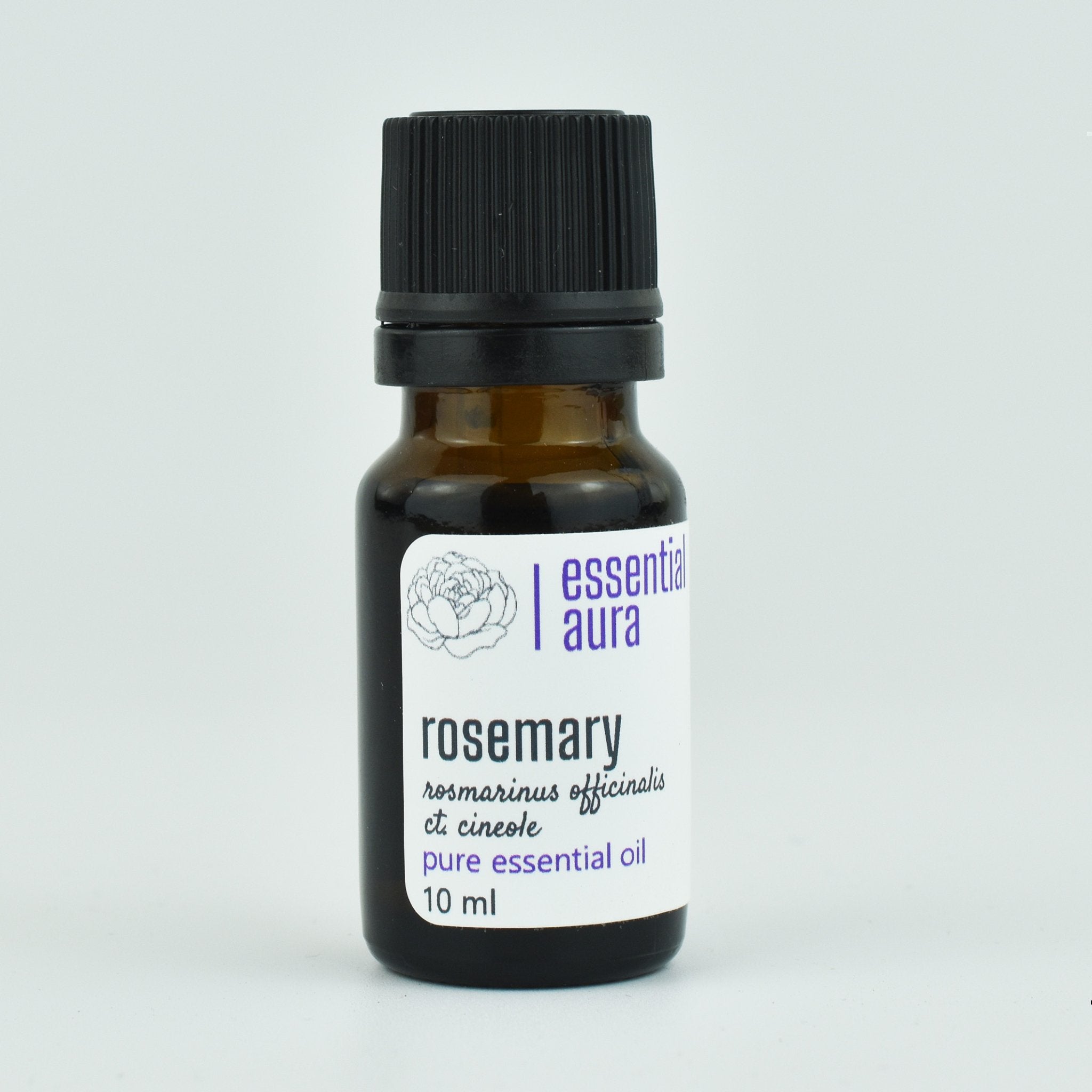

Rosemary, Cineole Essential Oil
Mix and save
Any 6 oils save 10%
Any 12 oils save 15%
Single essential oils only. Applied automatically at checkout. Shop all oils
Organic · Rosmarinus officinalis · India
Rosemary cineole essential oil is steam distilled from the leaves of Rosmarinus officinalis, now classified as Salvia rosmarinus, and comes from India. It is fresh, herbaceous and sweet, with a camphoraceous edge, made for diffusing and blending.
Traditional aromatherapy
How rosemary is used
Atmosphere and mood
Freshening the air. A few drops in a diffuser give a room a fresh, herbaceous scent with a camphoraceous edge.
Enlivening diffuser blends. Used in aromatherapy practice for enlivening diffuser blends while studying or working.
Body and skin care
Scalp and hair care. Well diluted in a carrier oil, rosemary is a familiar addition to hair and scalp blends.
A massage blend. Mixed into a carrier oil, rosemary gives a massage blend a fresh, herbal scent.
Ritual and perfumery
A herbaceous heart note. In perfumery, rosemary is a heart note in aromatic bouquets, adding an herbal lift between bright citrus openings and woody bases, and it sits well with the spicy or woody notes of fougère accords.
The study ritual. Diffuse it at your desk, and let its scent become the signal that study time has begun. Use a few drops while you work, then switch the diffuser off and open a window when you finish.
How to use it
- Diffuser: 3 to 5 drops, on and off for 30 to 60 minutes at a time, in a well-ventilated room.
- Body oil or massage blend: 6 to 9 drops per 30 mL of carrier oil, a 1% to 1.5% dilution. Try a small patch of skin first.
Keep away from children. For external and aromatherapy use only, and always diluted on skin. If you have epilepsy or high blood pressure, a quick check with your health provider is a good first step. Pregnant or nursing? Rosemary is best skipped unless your health provider says it's right for you.
Rosemary essential oil details
- Latin name
- Rosmarinus officinalis ct. cineole (now Salvia rosmarinus)
- Origin
- India
- Status
- Organic
- Plant part
- Leaf
- Extraction
- Steam distilled
What research says
Studied: the aroma has been studied for its effect on memory and alertness in healthy adults. In a study of 144 volunteers, those in a rosemary-scented room had better memory quality and felt more alert than those with no scent, though they were slower on memory tasks (Moss and colleagues, 2003). A smaller study of 20 adults found that performance on thinking tasks tracked with the amount of 1,8-cineole absorbed from the aroma (Moss and Oliver, 2012). Reviews of the clinical evidence describe it as limited, so these are small early studies.
More safety notes
- Do not apply rosemary on or near the face of infants or children (Tisserand's Essential Oil Safety, NAHA). The European herbal committee does not recommend the oil on skin under 18.
- Rosemary can irritate skin in some people. Always dilute it, patch test first, and keep it away from the eyes and broken skin. Health Canada's ingredient database lists topical use up to 1.5%, which is why we suggest 1% to 1.5%.
- Rosemary appears on NAHA's lists of oils to take care with in epilepsy, and New Zealand's medicines regulator lists it among essential oils rarely linked to seizures in young children and people with epilepsy. NAHA and the Tisserand brand also advise caution with high blood pressure. If any of these apply, or you take medication, a quick check with your health provider is a good first step.
- Pregnant or nursing? The European herbal committee does not recommend rosemary oil in pregnancy or breastfeeding, and NAHA lists it among oils to avoid in pregnancy, so it is best skipped unless your health provider says it's right for you.
Sources and last reviewed
Questions
What is rosemary cineole essential oil and what does it smell like?
Cineole is the chemotype: a rosemary whose oil is rich in 1,8-cineole. It smells fresh, herbaceous and sweet, with a camphoraceous edge. How a scent reads is personal, so your own nose has the last word.
How much rosemary oil goes in a diffuser?
Use 3 to 5 drops, and diffuse on and off for about 30 to 60 minutes at a time in a well-ventilated room.
How do I dilute rosemary oil for my skin?
Add 6 to 9 drops to 30 mL of carrier oil for a 1% to 1.5% dilution. Try a small patch of skin first, and keep it away from the eyes and broken skin.
Is rosemary oil safe around children and in pregnancy?
Keep it away from children, and never on or near a child's face. Pregnant or nursing? Rosemary is best skipped unless your health provider says it's right for you. If you have epilepsy or high blood pressure, a quick check with your health provider is a good first step.