
Tea Tree Essential Oil
Mix and save
Any 6 oils save 10%
Any 12 oils save 15%
Single essential oils only. Applied automatically at checkout. Shop all oils
Organic · Melaleuca alternifolia · Australia
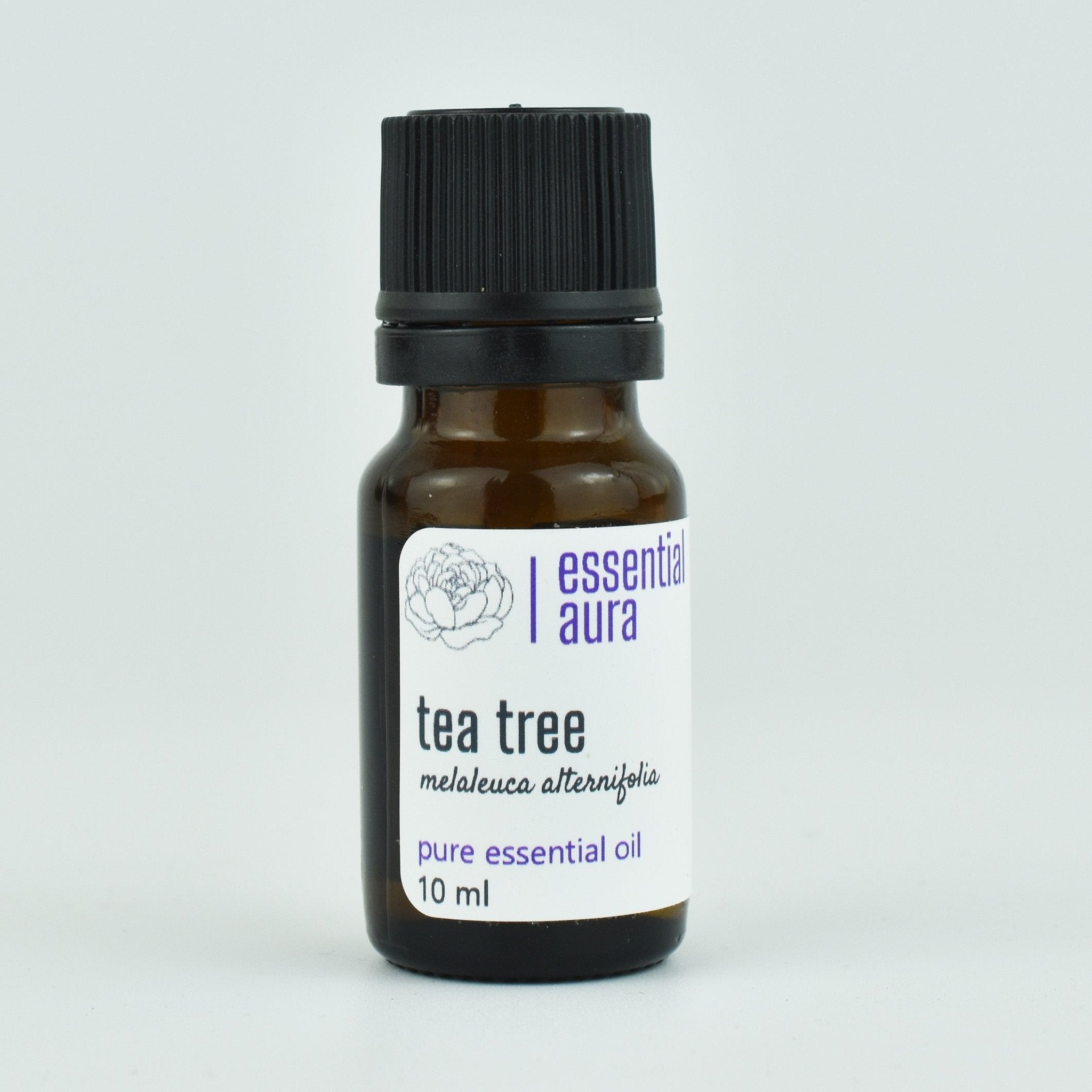
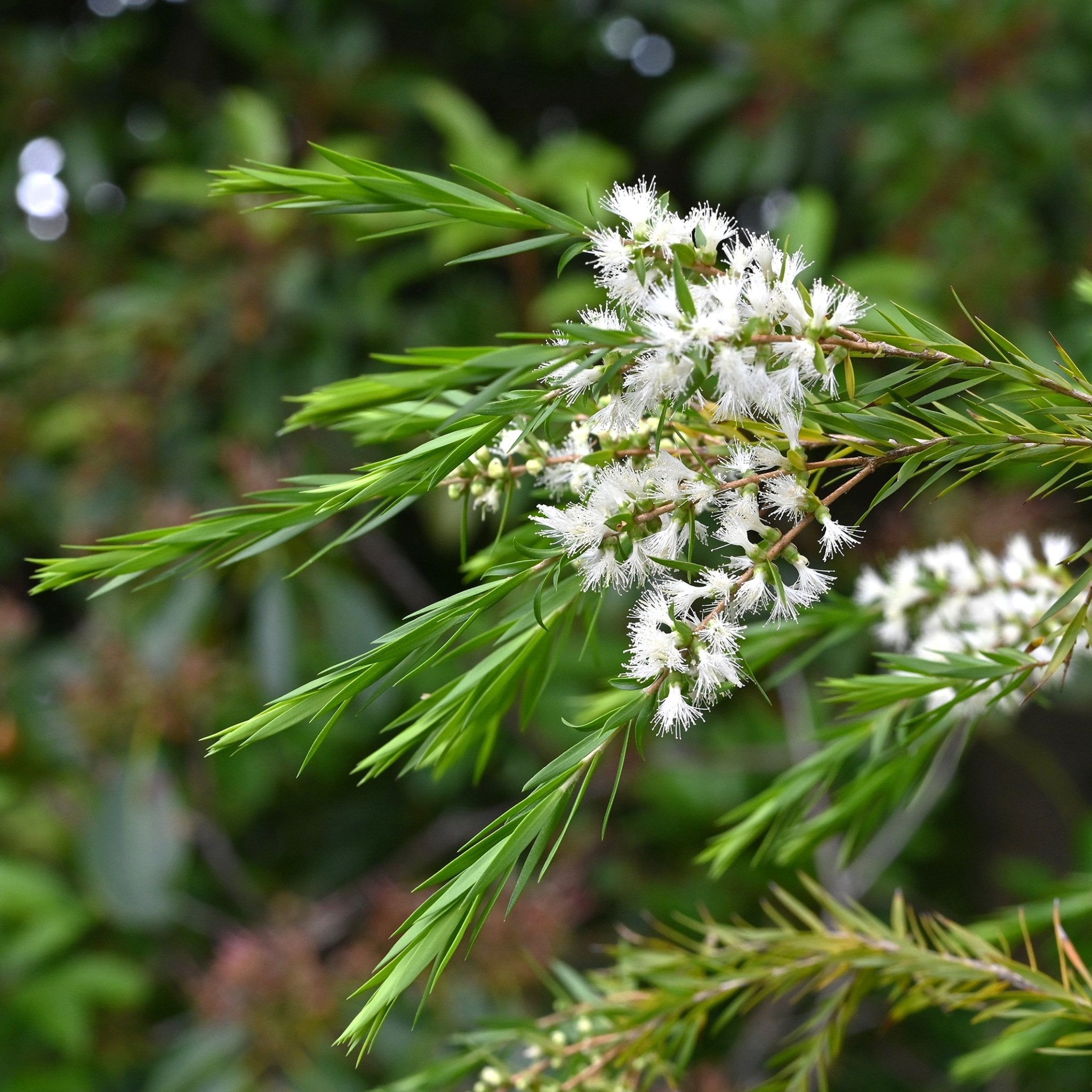
Tea tree essential oil is steam distilled from the needle-like leaves of Melaleuca alternifolia and comes from Australia. It is fresh and medicinal, with herbaceous, woody and camphor-like notes. It is traditionally used on the skin for small cuts and scrapes, insect bites and mild acne.
How to use it
- Body oil or massage blend: 6 to 12 drops per 30 mL of carrier oil, a 1% to 2% dilution. Try a small patch of skin first.
- Keep it fresh: keep the cap tight and store it cool and dark. Fresh oil is gentler on skin.
Keep away from infants and young children. For external and aromatherapy use only, always diluted on skin, and never swallowed. Pregnant, nursing, or have eczema or very sensitive skin? A quick check with your health provider is a good first step.
At a glance
- Latin name
- Melaleuca alternifolia
- Plant part
- Needles (leaves), by steam distillation
- Origin
- Australia
- Status
- Organic
- Size
- 10 mL and 30 mL
Traditional use and what research says
Traditional use: the European Medicines Agency's herbal committee lists tea tree oil as traditionally used on the skin for small superficial wounds, insect bites, small boils and mild acne, and for itching and irritation in mild athlete's foot. That rests on long-standing use rather than clinical trials, and the committee limits it to adults and adolescents over 12.
Studied: tea tree oil has been studied on the skin, mostly as a diluted gel or cream. In a single-blind trial of 124 people with mild to moderate acne, a 5% tea tree oil gel reduced the number of lesions, more slowly than 5% benzoyl peroxide but with fewer side effects (Bassett and colleagues, 1990). In a single-blind trial of 126 people aged 14 and over with mild to moderate dandruff, a 5% tea tree oil shampoo used daily for 4 weeks improved dandruff scores by 41%, against 11% for a placebo shampoo (Satchell and colleagues, 2002; funded by an Australian tea tree oil research institute). Smaller studies have looked at athlete's foot. The US National Center for Complementary and Integrative Health describes a small amount of evidence for acne and athlete's foot, with more studies needed, and not enough to judge nail fungus.
Traditional use, not yet studied
- Used in aromatherapy practice for easing the feel of colds.
- Used in aromatherapy practice for soothing itchy skin.
- Used in aromatherapy practice for foot care.
- Used in aromatherapy practice for soothing cold sores.
More safety notes
- Skin: fresh tea tree oil is a weak to moderate skin sensitizer, and it becomes more likely to cause a reaction as it ages and meets air and light. Always dilute it, patch test on a small area first, and stop if skin turns red, itchy or sore.
- Freshness: keep the cap tight and store the bottle cool and dark; Tisserand suggests the fridge. If the smell turns dull and medicinal instead of fresh and clean, stop using it on skin.
- Swallowing and sensitive areas: do not swallow tea tree oil. Keep it away from the eyes, ears, mouth and the inside of the nose.
- Eczema or very sensitive skin: a quick check with your health provider is a good first step.
- Pregnant or nursing: not sure if tea tree oil is right for you? A quick check with your health provider is a good first step.
- Children: keep it away from infants and young children. The European herbal committee's traditional-use advice covers adults and adolescents over 12.
- Diffusing: we leave diffusing out for this oil. NAHA advises no more than 20 minutes in a well-ventilated space, and a 2023 review of clinical trials does not recommend inhalation.
- Pets: cats are quite susceptible to tea tree oil, according to the Tisserand Institute, and a review of 443 dog and cat poisonings reported to the ASPCA over ten years involved concentrated tea tree oil. Keep the bottle, and anything made with it, away from cats and dogs, never put it on a pet, and call your vet or a pet poison line if a pet is exposed.
Sources and last reviewed
Questions
What does tea tree essential oil smell like?
Fresh and medicinal, with herbaceous, woody and camphor-like notes. How a scent reads is personal, so your own nose has the last word.
Can I use tea tree oil in a diffuser?
We leave diffusing out for this oil. NAHA advises no more than 20 minutes in a well-ventilated space, a 2023 review of clinical trials does not recommend inhalation, and cats and dogs are especially sensitive to tea tree oil. We suggest using it on skin, diluted, instead.
How do I dilute tea tree oil for my skin?
Add 6 to 12 drops to 30 mL of carrier oil for a 1% to 2% dilution. Try a small patch of skin first, stop if skin turns red, itchy or sore, and keep it away from the eyes, ears and the inside of the nose.
Is tea tree oil safe around children, in pregnancy and around pets?
Keep it away from infants and young children. Pregnant or nursing? A quick check with your health provider is a good first step. Keep it away from cats and dogs too, never put it on a pet, and call your vet if a pet is exposed.